
If you follow our posts or just pay attention to what’s happening in the world of search engine optimization, then you’ll know that B2B marketers are facing a Catch-22 right now. On the one hand, they can’t fully depend on AI to produce search-friendly content because the quality just isn’t there. But on the other hand, they can’t ignore AI tools that can save time and effort in playing the B2B SEO game and in optimizing a B2B website for organic traffic.
So how do professional marketers reconcile these ideas? How can they produce enough high-quality content to rise on Google’s rankings without burning out or turning buyers off with generic posts?
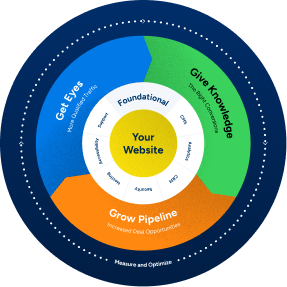
The answer, in our experience, is to bring together the best of human and AI inputs. We have experience building dozens of successful B2B inbound lead-generation campaigns using our unique G3 Framework. Here is some advice we might give to a busy marketing manager who needs to make the most of their time to deliver measurable results.
Use AI and Common Sense to Find Winning Content Ideas
As we’ve shared before, AI tools like ChatGPT and Claude are great at producing content quickly but not the best at conveying human authenticity in first-person perspectives. So, you definitely don’t want AI bots writing your articles or video scripts.
What you can (and should) use them for, however, is brainstorming. Ask your favorite Large Language Model (LLM) to give you a dozen article ideas on a certain niche within your industry, and you’ll almost always get at least a few inspirations you can work with. Conversely, you can have them review your most popular content posts and suggest updates, follow up on items, or explore related topics.
Most people don’t actually struggle to write or shoot video. Instead, what they hate is having to come up with something to say to their target market when working from a blank slate. AI is a wonderful tool for overcoming that kind of writer’s block because it can give you a virtually endless stream of potential topics to work with.
The only caution here is that you should apply your own creativity and critical reasoning to any suggestions you receive. While AI is good at generating concepts, it tends to follow conventional paths. Use whatever it recommends as a starting point rather than a finished thought.
Let a Human Create the First Draft of Anything
Once you have a great idea to work with, whether it has been generated by an LLM or your own mind, it’s time to start putting the first draft together. This is an area where we strongly advise you to do the work yourself.
Sit down at a desk and start typing, or turn on some lights and film your team. Or hire digital marketers, a B2B SEO agency, or professional writers to handle it for you. Whatever length and format you’re working with, let humans take the first pass on bringing your idea to life.
The reason for this isn’t complicated. By skipping AI on the first pass, you’re going to end up with something that feels more human and authentic. You’ll get warmth, humor, and personality coming through in a way that even sophisticated AI models can’t duplicate. You may even be able to use some first-person stories and perspectives. Ultimately, these strengths are what draw people in and make your content more engaging. It will perform better on search engines and stand out to buyers.
That doesn’t mean you can’t use any technology to speed things up, though. You might allow AI to create outlines to keep you on track (treat them as guidelines rather than firm scripts). You could also use speech-to-text to speed up content creation, or film many different takes continuously, knowing that you can use AI to filter out miscues later.
The exact steps you follow aren’t that important. What matters is that you keep a human touch in your content creation plan. You want to go quickly, but not so fast that you lose the sense of offering a one-to-one message to your website visitor.
Use AI to Proofread, Refine, and Optimize
If you follow the advice we have given and let AI help you to brainstorm topics and ideas, then create a first draft or first cut yourself, you should be creating articles and video clips in record time. Then you can let automated tools take the lead again and focus on the work they excel at.
While artificial intelligence might not be great at creating content in 2026, it can do amazing things clean it up (and at a great speed). For example, you can use ChatGPT to proofread a page or script in seconds. There are numerous video editing tools that can remove verbal pauses, scrap bad takes, fix lighting and sound, and add subtitles. These are often the most tedious and time-consuming parts of the content creation process. By outsourcing them to AI, you can free up time to create more or work in other parts of your inbound lead generation funnel.
Additionally, once your content is ready, you can use AI to help optimize it for search engine visibility. There are apps that can help with research, add search phrases, develop subtitles, add hashtags, create internal links, and more. That’s all more busywork that can be taken off your plate.
Once they are properly configured, AI tools can take away the most annoying and time-consuming SEO jobs on your plate. Just be sure to check everything yourself before it goes live, as even the best AI platforms still make mistakes.
Are You Following an SEO Playbook That Makes Sense?
By following the workflow outlined in this post, you can create smart, insightful, and authentic search content in much less time than you are used to. Then you’re on the right track to start attracting qualified leads from your website.
Want to take the first step? Try running run a free SEO audit on your current website. It’s a great way to kick off your B2B SEO website optimization strategy by first unpacking what you are trying to solve for. Already know you need a hand: learn more about our B2B SEO services for your company.
The Ultimate Guide to B2B SEO
Check out the Ultimate Guide to B2B SEO and download our checklist!